

Introduction
Event organisers spend months coordinating venues, speakers, programmes, exhibitors, catering, and technical requirements, yet some event planning essentials only become noticeable when guests arrive. If attendees have to wait while staff search for missing badges, repeatedly confirm their details, or work out which queue to join, unnecessary friction begins before the event itself.
A clear identification system can make that arrival much smoother. Badges and lanyards continue working after guests leave the registration counter. They help people recognise who they are speaking to, while giving event staff a quick way to identify different roles and access levels.
This guide covers the event planning essentials behind custom event badges, ID cards, lanyards, and efficient check-ins. From badge and lanyard design to check-ins, last-minute printing, and security features, we will explore practical ways to create an identification system that works from arrival through to the final session.
Key Takeaways
- Names, roles, access information, and scannable elements should have a clear hierarchy.
- Lanyards are also important event planning essentials, using colours and practical attachments to support identification, access control, branding, and comfortable all-day wear.
- Design the registration workflow around different guest groups and exceptions rather than sending everyone through one process.
- Spare badge stock, reprinting capability, and a separate troubleshooting point can prevent one problem from slowing the main queue.
- Consider security alongside design by using non-standard card formats and features such as holograms, UV elements, watermarks, and microtext to make event passes more distinctive and harder to reproduce.
Event Planning Essentials: Getting The Basics Right
Event badges and lanyards may seem like simple event planning essentials, but they can influence everything from guest identification to access control and networking. Planning their purpose early makes it easier to choose the right information, design, and features before production begins.
What Should Be on an Event Badge (and What Should Not)?
At a busy event, a badge should help staff and attendees quickly identify a person, their role, and their access level. The most effective approach is to make the most important information easy to spot, while keeping secondary details less prominent.
Prioritise Readability Over Decoration
An attendee’s name usually carries the greatest visual emphasis, followed by useful details such as their organisation or role. Clear typefaces and strong contrast help this information remain readable once the badge is printed, while too many branding elements can make important details harder to spot.
Consistent colour coding can provide another quick visual cue. For example, one colour could identify delegates while another distinguishes organisers. Consistent badge designs are useful event planning essentials, helping access-control staff recognise different attendee groups more quickly.
Role Visibility Matters
Roles such as “Speaker”, “Media”, “VIP”, or “Crew” should be easy to identify when those distinctions affect how people move through the venue.
A speaker arriving minutes before a session should not need to explain their status at several checkpoints. Likewise, venue or security teams should be able to recognise authorised crew without reading small text.
For more complex events, role identification can also work alongside access permissions. The badge might identify someone as media, for example, while the underlying QR code or RFID credential controls which areas that person can enter.
Only Include Useful Information
A badge works best when it displays only information that serves a clear purpose. Details such as the attendee’s name, organisation, or role can support identification and networking, while phone numbers, long job titles, addresses, or excessive sponsor branding may make the badge harder to read.
Keeping unnecessary details off the badge also limits the amount of personal information attendees display publicly throughout the event.
Leave Space for Scannables (If Needed)
QR codes and other scannable elements need enough clear space around them to be read easily without interfering with the rest of the badge design. Their position also affects how naturally attendees can present the badge at registration or access points, especially when it is attached to a lanyard.
For organisers using a PVC card printer, testing the finished badge before event day can confirm that the code remains readable at its printed size and works smoothly with the intended scanning system. This can reduce failed scans and unnecessary delays when large numbers of guests arrive within a short period.
Add Security Where the Event Requires It
Security becomes more important when event passes provide access to backstage areas, VIP spaces, restricted rooms, or other controlled zones. Special sizes such as 84 × 110 mm and 84 × 140 mm can make passes more distinctive, while features such as holograms, guilloche patterns, HoloPatch or HoloKote elements, UV printing, and microtext can make them harder to reproduce.
For events requiring digital verification, QR codes, barcodes, or RFID can provide an additional way to validate access. Combining these measures can help staff recognise legitimate passes more easily while strengthening protection against counterfeit credentials.

How to Customise Lanyards That Do More Than Hold a Card
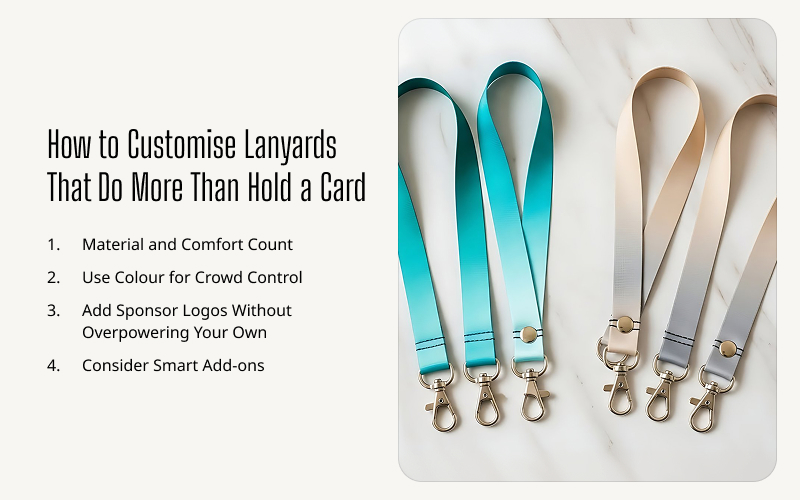
Lanyards are highly visible event planning essentials that keep serving a purpose after check-in. Besides holding an attendee’s badge, they can reinforce event branding, distinguish different guest groups, showcase sponsors, and keep credentials easily accessible throughout the day.
Material and Comfort Count
At a short networking session, almost any functional lanyard may seem adequate. At a full-day conference or multi-day trade exhibition, comfort becomes more noticeable because attendees may wear it for many consecutive hours.
Material, width, finishing, and attachments should therefore suit the event. Smooth options may feel more comfortable for extended wear, while woven styles can provide a different look and feel depending on the branding.
At Paclin Office, our lanyard printing options include polyester, nylon, and eco-friendly choices, together with different attachments. Before committing to production, it is important to consider how the lanyard feels with the actual badge attached.
Use Colour for Crowd Control
Colour can turn a custom lanyard into a quick visual identification tool. Attendees might receive one colour, speakers another, while crew and media use clearly different options.
These event planning essentials are useful when different groups have different entry points or privileges. A staff member monitoring a restricted doorway can identify the likely credential category before checking the badge itself.
However, colour alone may not be enough when security is a priority. A secondary indicator on the badge can give staff another way to verify access, especially when attendee categories use similar colours.
Add Sponsor Logos Without Overpowering Your Own
Lanyards can give sponsors repeated visibility throughout an event, but their branding should still be easy to distinguish from the event organiser’s identity. A balanced customised lanyard can give both brands clear exposure, with logos spaced and repeated so they remain recognisable even when the lanyard twists or folds while being worn.
At Paclin Office, we provide design support, mock-ups, proofs, and sample review as part of our lanyard customisation process. This gives organisers an opportunity to review how the event and sponsor branding work together before proceeding with full production.
Consider Smart Add-ons
Attachments should reflect how attendees will actually use their credentials. Breakaway clips can add a safety feature, while retractable badge reels can make cards easier to present repeatedly to readers or access points.
Some events may also use lanyard attachments to hold room keys, tokens, sanitiser bottles, or other small items attendees need throughout the day. As part of your event planning essentials, the most useful attachments are those that make credentials or frequently used items easier to carry and access during the event.
Event Planning Essentials for Smooth Check-Ins and On-Site Flow
Smooth check-ins depend on how quickly staff can find registrations, issue the right credentials, and handle exceptions without slowing the queue. These event planning essentials should reflect the event’s attendance size, venue layout, and expected arrival patterns.
What is the Most Efficient Way to Handle Guest Check-ins at Scale?
Large events often experience concentrated arrival periods. Hundreds of attendees may arrive shortly before the opening session, meaning even a small delay at each transaction can quickly create a queue.
This explains why a fast event check-in system requires more than quick scanning. It should minimise unnecessary decisions at the counter and provide a separate path for attendees whose registration cannot be processed normally.
Segment Guests Before Arrival
Pre-categorising VIPs, exhibitors, speakers, media, crew, and delegates can make it easier to direct each group to the appropriate counter or lane. Badge formats and lanyard colours can provide additional visual cues, helping staff recognise each category more quickly.
Segmentation also helps organisers plan check-in capacity around expected arrivals. For example, if 600 delegates and 30 speakers are expected within the same half-hour, more counters can be allocated to the larger group to keep queues moving.
Leverage Pre-Printed or On-Demand Badges
Pre-printed badges are useful event planning essentials when the attendee list is stable, as they can be sorted for quick collection. However, late registrations, replacement delegates, or name corrections may still require on-site changes.
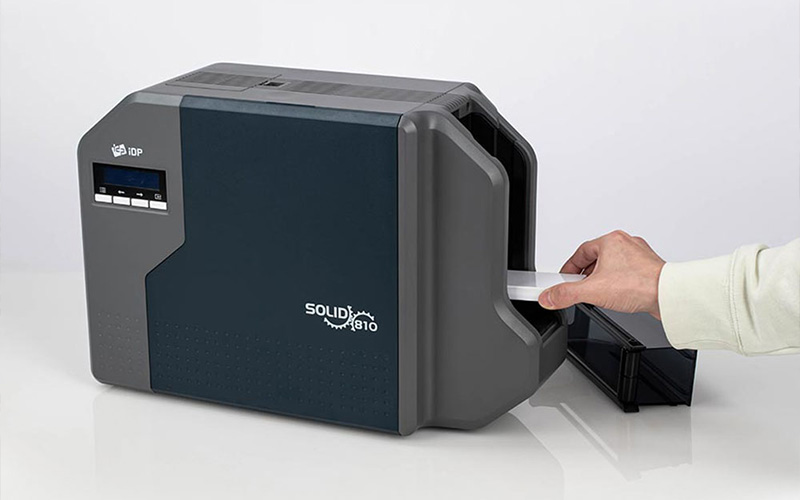
For events with frequent changes, on-site badge printing makes it easier to handle late registrations, replacements, and corrections as they arise. With a badge card printer available at the venue, updated or newly approved credentials can be printed immediately without disrupting the main check-in process.
Use QR Code or RFID-Based Check-In Systems
Digital credentials can speed check-in by reducing manual data entry. When an attendee presents a QR code or compatible credential, a quick scan can retrieve their registration details for verification.
For seamless event registration, scanners, registration data, badge printing, and network connections need to work together, with a backup process available if scanning fails. Where RFID is part of the event setup, Paclin Office can support the identification process with RFID cards and visitor and event management solutions.
Designate Access Zones at Entry Points
Registration and access control should follow the same logic. If lanyard colours distinguish groups, signage and entry lanes should use matching terminology so guests do not have to interpret two different systems.
As part of event planning essentials, clearly separated zones for VIPs, exhibitors, and general attendees can direct each group to the appropriate counter and prevent more complex check-ins from slowing the main queue.

How to Handle Last-Minute Badge Printing Without the Chaos
Last-minute changes can happen even with careful planning. Replacement delegates, incorrect names, lost badges, walk-ins, and unexpected VIPs can all affect same-day registration. Preparing for these situations as part of event planning essentials can help keep the main check-in process moving.
Set Up a Badge Troubleshooting Counter
A dedicated troubleshooting counter keeps complex registration issues away from the main check-in queue. Cases such as replacements, misspellings, missing records, and unregistered attendees can be handled separately, while also providing a clear point for walk-in guest management.
Clear approval responsibilities are an essential event-planning tool, helping staff confirm whether unexpected attendees should receive standard, VIP, media, or restricted-access credentials before printing a badge.
Stock Extra Blank Cards and Lanyards
Keep surplus badge stock, card holders, and lanyards at the venue. The appropriate buffer will depend on attendance volume, expected walk-ins, and how stable the guest list is.
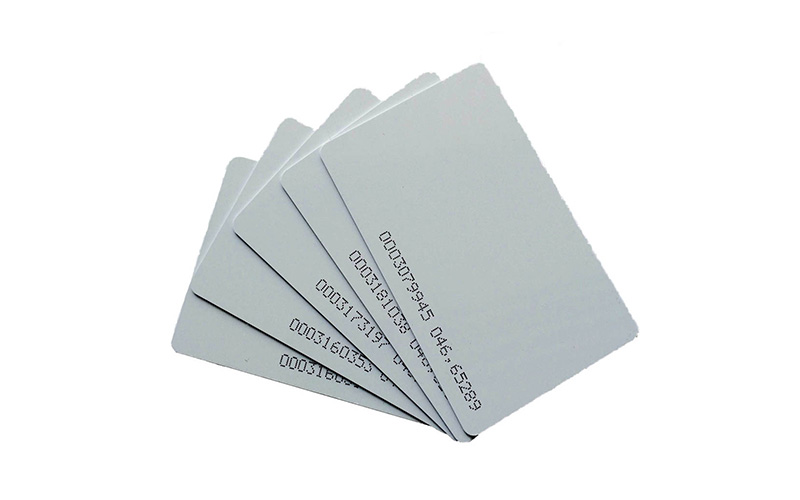
For durable credentials, a PVC card can work well when passes need to withstand repeated handling or remain in use across several days. A neutral emergency design is worth considering for approved guests who cannot be processed through the normal template.
Use Plug-and-Play Badge Printers
On-site printing should be straightforward for trained event staff to manage, even during busy registration periods. Prepare templates, data fields, printer settings, and consumables in advance to reduce delays when badges need to be issued or reprinted.
A checklist of event planning essentials can also cover spare consumables and a response plan for printer issues. Test prints with long names, double-barrelled surnames, lengthy company names, and different role labels to catch formatting issues before the event.
The printer choice also affects how easily you can handle these last-minute requirements. Paclin Office’s card-printer range includes equipment for ID and event-pass production, with compact options suited to on-site issuance. Our selected Magicard models also support HoloKote security watermarks and HoloPatch cards when stronger credential security is needed.
Train a ‘Rapid Response’ Team
Equipment alone does not solve last-minute changes. Assign a small group who understands the guest database, badge templates, printing workflow, approval rules, and escalation contacts.
A rapid-response team can prepare for missing badges, replacement delegates, or other unexpected scenarios before registration begins. Clear responsibilities help staff handle badge issues consistently and prevent registration delays.
Frequently Asked Questions
1. Do I really need both a custom badge and a lanyard for my event?
Yes, when attendees need visible identification throughout the venue, the two perform complementary roles. The badge carries individual information such as the attendee’s name, organisation, role, or access credential, while the lanyard keeps it visible and can reinforce event branding.
Lanyard colours can also help staff distinguish groups quickly. Together, these event planning essentials can support networking, role recognition, and access management more effectively than relying on either element alone.
2. What is the best badge material for events lasting more than one day?
PVC cards or laminated badge stock are commonly suitable for multi-day events because they can withstand repeated handling better than standard paper badges. They can also support features such as RFID or barcode scanning where required. Paper badges may be sufficient for shorter events, but can be more prone to creasing or wear over several days.
3. How far in advance should I finalise my badge and lanyard design?
A working target of around three to four weeks before the event can provide time for artwork review, proofing, production, and delivery, while leaving a buffer for corrections. As part of event planning essentials, more complex credentials involving RFID, security features, or special specifications may require additional preparation and testing.
Conclusion
Badges and lanyards do more than identify attendees. Clear designs, visible roles, appropriate security features, and comfortable lanyards can support smoother interactions while keeping the event looking organised and professional.
Successful check-ins also depend on preparation. Guest segmentation, pre-printed or on-demand badges, QR or RFID technology, and a clear process for replacements and walk-ins are event planning essentials that help keep registration moving. Spare materials and on-site printing provide additional support when last-minute changes arise.
At Paclin Office, we support these requirements with event cards, customised lanyards, card-printing equipment, visitor-management solutions, and on-site event registration services. We aim to help organisers bring identification and check-in requirements together for their events.
Planning an upcoming event? Contact us to find the right event planning essentials for smoother guest identification and check-ins.
 Paclin